Remote work reshapin
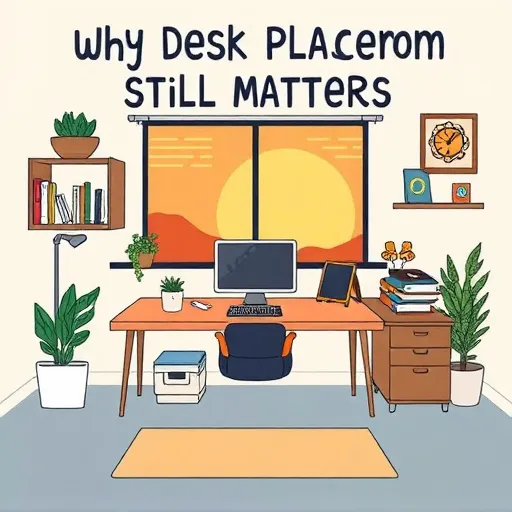
Why Desk Placement Still Matters in 2026
Here's the reality: the last few years have completely transformed how professionals think about their workspaces. Home offices morphed from temporary pandemic fixes into permanent career infrastructure. Companies downsized headquarters and distributed teams across time zones. And an entire generation of workers figured out that their environment isn't neutral — it either fuels their focus or quietly drains it. That's exactly why feng shui office desk placement for career has become more relevant than ever.
Feng shui, at its core, is the study of how energy flows through a space. Modern environmental psychology says essentially the same thing in different language: sightlines, lighting, clutter, and positioning all influence stress levels, creativity, and decision-making. When we talk about feng shui office desk placement for career, we're really talking about aligning your physical workspace with your professional goals — visibility, stability, clarity, and forward momentum.
Workplace design consultants increasingly blend these two traditions. A seasoned workplace strategist might not call it feng shui, but they'll tell you the same things: never sit with your back to the door, don't face a blank wall if you can help it, and keep your desk out of the direct path of foot traffic. The vocabulary differs; the advice converges. And that convergence is precisely what makes feng shui office desk placement for career so powerful — it's both ancient wisdom and practical ergonomics rolled into one.
The Command Position and Psychological Security in Feng Shui Office Desk Placement for Career
If you take away one principle from this entire article, make it this one: the command position. In feng shui, the command position is the spot in a room where you can see the entrance clearly without being directly in line with it. It's sometimes called the "power position," and it's the single most important factor in feng shui office desk placement for career advancement.
Why does it work so well? When you can see who enters, your nervous system relaxes. You're not startled, not scanning over your shoulder, not subtly stressed all day. That calm translates into better concentration and steadier decision-making. Facing the room rather than the wall puts you in a position of authority — literally and figuratively. It's the difference between sitting in the audience and sitting at the head of the table. In feng shui philosophy, the command position supports the growth of your reputation and influence. It signals readiness and openness rather than retreat.
Here's how to find it in any room: stand at your office doorway and look inward. The diagonal corner farthest from the door — but still with a clear line of sight to it — is your command position. Place your desk there, with your chair backed by a solid wall and your gaze toward the entrance. If the room is small or oddly shaped, you may need to compromise, but always prioritize sight of the door above everything else. What if you can't see the door from where you sit? Feng shui practitioners suggest a mirror or reflective surface positioned so you can see the entrance indirectly. This is a practical fix that also has real psychological benefits — you genuinely do feel more at ease when you know who's coming. And that sense of ease is the foundation of effective feng shui office desk placement for career success.
Placement Pitfalls That Undermine Career Energy and Workplace Productivity
Knowing where to sit is half the battle. Knowing where not to sit is the other half. Let's run through the major placement mistakes that quietly sabotage career energy — and your overall productivity.
Facing a blank wall is one of the most common — and most career-limiting — setups. In feng shui, a blank wall in front of you represents a blocked view, a dead end, and limited opportunity. Symbolically, there's no horizon. Practically, staring at a wall all day is monotonous and draining. If you have no choice, hang artwork, a vision board, or a shelf with plants to soften the wall and create a sense of depth.
Sitting with your back to the door is often called the "position of least resistance" in feng shui — and not in a good way. It creates vulnerability and low-level anxiety, because a part of your brain stays on alert. Career-wise, it's associated with being overlooked, passed over, or blindsided by workplace developments. Rookie mistake, and easily fixed.
There's a difference between seeing the door and being in its direct path. A desk aligned straight with the doorway puts you in the flow of incoming energy — which sounds nice until you realize it also brings noise, distraction, and a feeling of being "on display." Offset your desk so you're diagonal to the door rather than directly in front of it. This one tweak alone can transform your feng shui office desk placement for career results.
Windows are wonderful for light, but sitting with your back directly to one can create a feeling of exposure and instability. In feng shui terms, a solid wall behind you represents backing and support — crucial for career stability. Use the window for light from the side or front, not behind. And if your desk sits in a corridor, near a high-traffic doorway, or in the middle of a walkway, you're absorbing constant movement. Feng shui calls this "rushing energy," and it's terrible for focus. Environmental psychology calls it a distraction hazard. Same conclusion: move the desk if you can, or create a visual barrier with a plant, divider, or shelving unit.
Desk Orientation and Career Direction in Feng Shui Office Desk Placement for Career
Feng shui isn't one-size-fits-all. Different orientations are said to support different goals, and since our focus here is career advancement, some directions get special attention. This is where feng shui office desk placement for career gets really interesting.
In the feng shui bagua — the energy map of a space — the north area is associated with career and life path. If you have flexibility in where you place your desk, setting up in the north part of your room or facing north while you work is traditionally thought to support professional growth, networking, and the water element's fluid, adaptable energy. Water symbolizes flow and opportunity in feng shui, and the career sector is ruled by it.
The southeast sector is associated with abundance and recognition. Placing your desk there — or orienting toward the southeast — is said to support financial growth and career visibility. These are traditional associations, and you can take them as symbolic or practical: what matters is that choosing an intentional direction makes you mindful of your goals every time you sit down. More in-depth feng shui uses your personal "kua number" to determine your best directions. A seasoned feng shui consultant can map these out. For most people, though, the command position and a north or southeast orientation are more than enough to start — and they represent the most accessible entry point into feng shui office desk placement for career.
Desk Shape, Clutter, and Career Energy in Your Workspace
Placement principles matter, but the state of your desk matters just as much. In feng shui, clutter is the single greatest enemy of career momentum. A crowded, disorganized desk represents stuck energy and scattered focus. When evaluating feng shui office desk placement for career, don't forget the physical elements of your setup.
Choose a supportive desk shape. Rectangle or L-shape desks are considered the most stable and career-supportive shapes. They offer solid backing and a sense of structure. Oval or curved desks are a softer option, good for collaboration and harmony — curves are said to soften sharp energy. Avoid sharp corners pointed at you: in feng shui, sharp corners are "poison arrows" that direct aggressive energy toward you. This includes corners of other desks or shelves aimed at your seat.
Keep the desk surface clear. A minimum of 30–40% empty space on your desk is a good rule of thumb. Open space in front of you invites new opportunity. Piles of paper, old coffee cups, and random mail are literal clutter that translates into mental clutter. In 2026, remember that digital clutter counts too — a desktop buried in files and a messy inbox create the same stuck feeling. And don't overlook mountain support: a solid wall behind your chair represents reliable backing and stability in your career. If your back is exposed to a window or open space, add a high-backed chair, a tall bookcase, or a solid partition behind you to recreate that sense of support. These details all feed into successful feng shui office desk placement for career.
Symbolic Enhancements for Career Growth and Professional Advancement
Once placement is locked in, you can layer in feng shui adjustments that reinforce career intention. Keep it tasteful — a few meaningful items, not a shrine.
A small, healthy green plant is a classic career booster. It's associated with growth, vitality, and the wood element. Say no to wilted or dying plants — they represent stagnation. A snake plant or a small succulent is a low-maintenance choice. Since the career sector is linked to water, a small desk fountain or a glass of water in the north or east corner of your desk can symbolically invite flow and opportunity. Keep it clean and moving. A vision board, a meaningful quote, or a photo that represents your professional aspiration subtly reinforces your intention every time you glance at them. Bright, even lighting — ideally natural light plus a quality desk lamp — supports alertness and clarity. In feng shui, good lighting is simply good energy flow. Avoid heavy or dominating decor directly in your line of sight — large, dark objects can feel oppressive. Keep your forward view light and open. All of these enhancements work best when your feng shui office desk placement for career foundation is already solid.
Common Mistakes in Feng Shui Office Desk Placement for Career to Avoid
Let's compile the big no-nos so you can audit your setup in five minutes flat. First, desk facing a mirror: mirrors facing your work area reflect energy and can create a feeling of being watched or overstimulated. Second, desk positioned behind a door: you'll feel the movement behind you and stay subtly on edge. If unavoidable, add a solid partition or place a small mirror for sight of the entry. Third, clutter under the desk: hidden clutter is still clutter. A clear area beneath your desk supports free energy flow — and it's better for your legs, too. Fourth, broken or non-functional items: a wobbly chair, a cracked mug, a dead plant — these are all symbols of decay and decline. Fix them or remove them. Fifth, working from a bed or sofa: in hybrid setups, working from a bed is the opposite of career-supportive energy. It blurs the boundary between rest and productivity, which hurts both. Every one of these mistakes directly undermines your feng shui office desk placement for career efforts, so take them seriously.
Real Results and Evidence Behind Feng Shui Office Desk Placement for Career
It's fair to ask: does feng shui office desk placement for career have any real-world backing? The truthful answer is that its principles align remarkably well with evidence-based environmental psychology and modern ergonomics. Sitting with a view of the door reduces startle responses and scanning behavior — both documented sources of cognitive load. A clear, organized desk reduces visual noise that competes for attention. Solid backing and stable furniture reduce physical tension. Natural light and plants have been shown in study after study to improve mood and productivity. Even the symbolic elements aren't foolish: visual reminders of your goals help maintain motivation over the long haul. So whether you frame it as energy flow or attention management, the outcomes are the same. A well-placed desk is a career asset, and these principles are timeless enough that they've survived into 2026 — not because they're mystical, but because they're true. That's the real power of feng shui office desk placement for career.
Take ten minutes today. Stand at your door, look at your desk, and ask yourself whether your setup says "ready for the next opportunity" — or "blocked and boxed in." Position with purpose, and let your career flow.