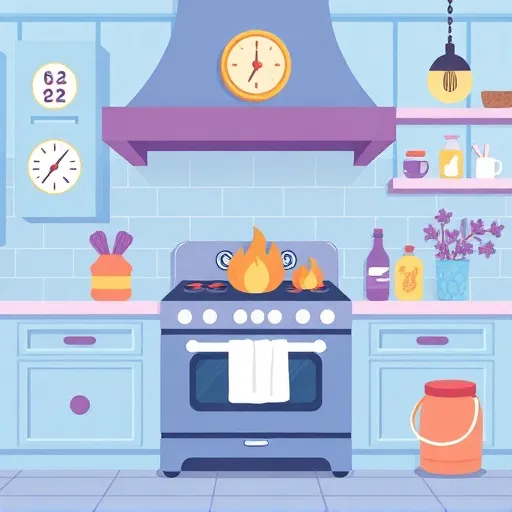
Stove as feng shui f
Why Stove Placement Matters So Much in Feng Shui
Before we dive into the "where" and "how," let's talk about the "why." In traditional feng shui philosophy, your stove isn't just another appliance sitting in the corner—it's a powerful symbol of the fire element and your family's ability to feed itself, both literally and metaphorically. That's exactly why feng shui kitchen stove placement rules carry so much weight in any home. A well-placed stove is said to support career stability, harmonious relationships, and financial abundance. But a poorly placed one? Well, that's where things get a little messy.
Lots of modern feng shui consultants—including folks trained in contemporary schools—stress that the stove should be treated as a focal point of positive energy flow (often called qi or chi). When the stove sits in an awkward spot—facing a door, crammed into a corner, or directly opposite the sink—it creates what practitioners call "conflicting energy." And that conflict can show up as stress, arguments, or just a general sense of restlessness around the house. Understanding the feng shui kitchen stove placement rules is really about preventing that kind of low-grade tension before it takes root.
So whether you're a believer or a total skeptic, there's genuine value in thinking about how your kitchen layout shapes your daily mood and routine. Feng shui, at its core, is about intentional design—and intentional design always pays off. The feng shui kitchen stove placement rules are simply a framework for that intention.
The Core Feng Shui Kitchen Stove Placement Rules You Need to Know
Alright, let's break down the big ones. These are the feng shui kitchen stove placement rules that come up again and again in feng shui literature and in conversations with experienced practitioners.
1. The Stove Should Never Face the Kitchen Door Directly
This is probably the most frequently cited of all the feng shui kitchen stove placement rules. In feng shui, when the stove faces the door directly, it's believed the cook is constantly exposed to incoming energy that can "blow out" the fire. Practically speaking, this also means whoever's cooking has their back turned to the room—or faces the door while standing at the stove—which just feels unsettling.
If your stove currently faces the door, don't panic. You can soften the effect by placing a small barrier—like a kitchen island, a decorative screen, or even a potted plant—between the stove and the doorway. Some folks also hang a curtain or use a partial partition to redirect the energy flow. These little fixes are some of the easiest feng shui kitchen stove placement rules to apply without ripping anything apart.
2. Keep the Stove and Sink Separate to Balance Fire and Water Elements
Here's where the five elements come into play. The stove represents fire, and the sink represents water. In feng shui, fire and water are considered opposing forces. When the stove and sink sit directly next to each other—or worse, face each other—it creates elemental conflict. This is one of those feng shui kitchen stove placement rules that people tend to overlook because it seems so minor on the surface.
The ideal setup is to have at least some counter space between the stove and the sink. If that's not possible, try creating a visual buffer—a cutting board, a decorative tray, or a small herb garden can act as a bridge between the two elements. Even something as simple as keeping the sink area dry and uncluttered can help reduce the tension between these zones.
3. The Cook Should Have a Clear View of the Room
This one's rooted in a very practical idea: in traditional feng shui, the cook should be able to see who enters the kitchen. When your back is to the door, you're in a vulnerable position. From an energy perspective, that creates a sense of unease. From a practical perspective—well, you know how it feels when someone sneaks up behind you while you're stirring a pot. Among all the feng shui kitchen stove placement rules, this one blends ancient wisdom with plain old common sense.
The ideal stove placement lets the cook stand with a clear line of sight to the kitchen entrance. If that's not possible, consider hanging a small mirror or a reflective surface that lets you see behind you. Some modern kitchens use open shelving or glass cabinet doors to create greater spatial awareness.
4. Avoid Placing the Stove Under a Window
This rule surprises a lot of people. After all, a stove under a window seems bright and airy, right? But in feng shui, a window represents an opening through which energy—and, symbolically, wealth—can escape. Placing the stove beneath a window is believed to let the fire energy dissipate too quickly, which undermines the stove's role as a wealth anchor. It's one of the feng shui kitchen stove placement rules that catches people off guard because it contradicts what looks good aesthetically.
Plus, from a purely practical standpoint, cooking near an open window can be unsafe—drafts can blow out flames, and curtains can catch fire. So whether you're following feng shui or just using common sense, this is one feng shui kitchen stove placement rules guideline worth honoring.
5. The Stove Should Sit Against a Solid Wall for Stability
In feng shui, a solid wall behind the stove represents stability and support. It's often called a "mountain" in feng shui terms—a strong backing that provides security. When the stove sits on an island or in the middle of the room without a wall behind it, it's believed to lack this foundation, which can lead to instability in finances or family dynamics. This is one of those feng shui kitchen stove placement rules that modern open-plan kitchens really struggle with.
If you have a kitchen island with a cooktop, try to create a sense of grounding. A backsplash, a raised bar area, or even a row of pendant lights can help anchor the energy and give the space a stronger foundation.
Directional Feng Shui Kitchen Stove Placement Rules: Where Should the Stove Face?
In feng shui, compass directions play a significant role in stove placement. Different schools of thought offer slightly different interpretations, but here are the general guidelines most practitioners agree on in 2026. Think of these as the feng shui kitchen stove placement rules for orientation.
- South-facing stoves: The south is associated with the fire element, so a stove facing south is often considered auspicious. It's believed to enhance warmth, hospitality, and recognition.
- East-facing stoves: The east represents growth and renewal. A stove facing east is thought to support family harmony and new beginnings.
- Southeast-facing stoves: This direction is linked to wealth and abundance. Placing the stove here is often recommended for those seeking financial growth.
- West-facing stoves: The west is associated with metal and creativity. Some practitioners warn against placing the stove here if the occupants are focused on wealth accumulation, since fire (stove) can "melt" metal (wealth).
- North-facing stoves: The north is a water direction. Since fire and water conflict, a north-facing stove is generally approached with caution. However, if the overall layout supports it, it's not a dealbreaker.
It's worth noting that real-world kitchens don't always allow for perfect directional alignment. If you can't place your stove in an ideal direction, don't stress. Feng shui is about balance, not perfection. A few small adjustments—like using natural light, color, or decorative elements—can help harmonize the energy. The feng shui kitchen stove placement rules are a guide, not a straitjacket.
Common Stove Placement Mistakes to Avoid in Your Kitchen Layout
Even well-intentioned homeowners sometimes stumble. Here are a few common pitfalls that violate the core feng shui kitchen stove placement rules—watch out for these:
- Stove facing a bathroom door: This is considered a major no-no. The bathroom is a place of elimination, and having the stove face that door is believed to "wash away" prosperity. If this is your layout, keep the bathroom door closed and consider hanging a screen or curtain.
- Stove facing the refrigerator: The refrigerator is a water element, and the stove is fire. Placing them opposite each other creates the same elemental conflict as stove-and-sink. Try to separate them with a counter or a decorative barrier.
- Stove squeezed into a corner: Corners are considered "dead spaces" in feng shui. A stove crammed into a corner is believed to limit the cook's energy and stifle the household's abundance. If space is tight, make sure there's at least a little breathing room on both sides.
- Stove positioned directly under a beam: Overhead beams are thought to create "pressure" energy. A stove under a beam is believed to cause stress and tension in the household. If you can't move the stove, try softening the beam with fabric, plants, or lights.
Modern Kitchen Trends and Feng Shui Kitchen Stove Placement Rules: A 2026 Perspective
In 2026, kitchen design is all about open plan living, multifunctional islands, and smart appliances. But these trends can sometimes clash with traditional feng shui kitchen stove placement rules. For example, open-plan kitchens often place the stove on an island, which directly conflicts with the "solid wall" rule we covered earlier.
So how do you balance modern design with feng shui? The key is adaptation. Many contemporary feng shui consultants—including seasoned professionals in the field—now advocate for a more flexible approach. Instead of rigidly following every one of the feng shui kitchen stove placement rules, they encourage homeowners to focus on the intention behind the rule and find creative solutions.
For instance, if your stove is on an island, you can create a sense of grounding by adding a sleek backsplash or a raised bar counter. If your stove faces a door, a strategically placed glass partition or a row of hanging plants can soften the energy. The goal is to make the space feel balanced, comfortable, and intentional—which is really what the feng shui kitchen stove placement rules are pointing toward anyway.
Some industry professionals also recommend incorporating natural materials—like wood, stone, and linen—to create a harmonious atmosphere. These textures are believed to support the flow of positive energy and add warmth to even the most modern kitchens.
Practical Tips for Optimizing Your Feng Shui Kitchen Stove Placement Rules
Here's a quick checklist to help you make the most of your kitchen layout while honoring the feng shui kitchen stove placement rules:
- Wash your stove regularly. A clean stove is believed to attract positive energy. Plus, let's be honest—nobody feels good cooking on a grimy surface.
- Keep the stove in good repair. A broken burner or a malfunctioning ignition is seen as a sign of "stuck" energy. Fix it ASAP.
- Use the stove often. In feng shui, a stove that's rarely used is considered "dead" energy. Even if you're not a big cook, try boiling water or making tea regularly to keep the fire energy alive.
- Add a mirror near the stove. A small mirror or reflective surface can double the visual impact of the stove, symbolically multiplying abundance. Just make sure it doesn't reflect the stove directly back at itself.
- Introduce wood elements. Wood feeds fire in the five-element cycle, so adding wooden cutting boards, utensils, or decor near the stove can be supportive.
- Avoid excessive clutter. Clutter blocks energy flow. Keep your countertops as clear as possible, especially around the stove.
Frequently Asked Questions About Feng Shui Kitchen Stove Placement Rules
What if I can't move my stove to follow these placement rules?
Most people can't—or don't want to—reroute gas lines or redo their entire kitchen layout. The good news is that feng shui offers plenty of "remedies" that don't require heavy construction. Mirrors, screens, plants, colors, and lighting can all be used to correct or soften problematic placements. Focus on what you can change, not what you can't. The feng shui kitchen stove placement rules are meant to be adapted, not agonized over.
Does the color of the stove matter under feng shui kitchen stove placement rules?
Interestingly, yes. In feng shui, black and dark blue are considered water colors, which can conflict with the fire element of the stove. If you're choosing a new stove, stainless steel or white is generally considered neutral and harmonious. That said, the color of the stove is a minor factor compared to its placement.
Is it okay to have a stove with multiple burners?
Absolutely. In fact, multiple burners are seen as a positive feature—they represent abundance and variety. Just make sure all burners are functional. A broken burner is considered a symbol of "blocked" prosperity.
What about induction or electric stoves?
From a feng shui perspective, the type of stove matters less than its placement and condition. Induction and electric stoves don't produce visible flames, but they still represent the fire element symbolically. The key is to keep them clean and well-maintained.